

 See My Latest Article on HelloNation
What Are the Warning Signs of Dangerous Tree Roots?
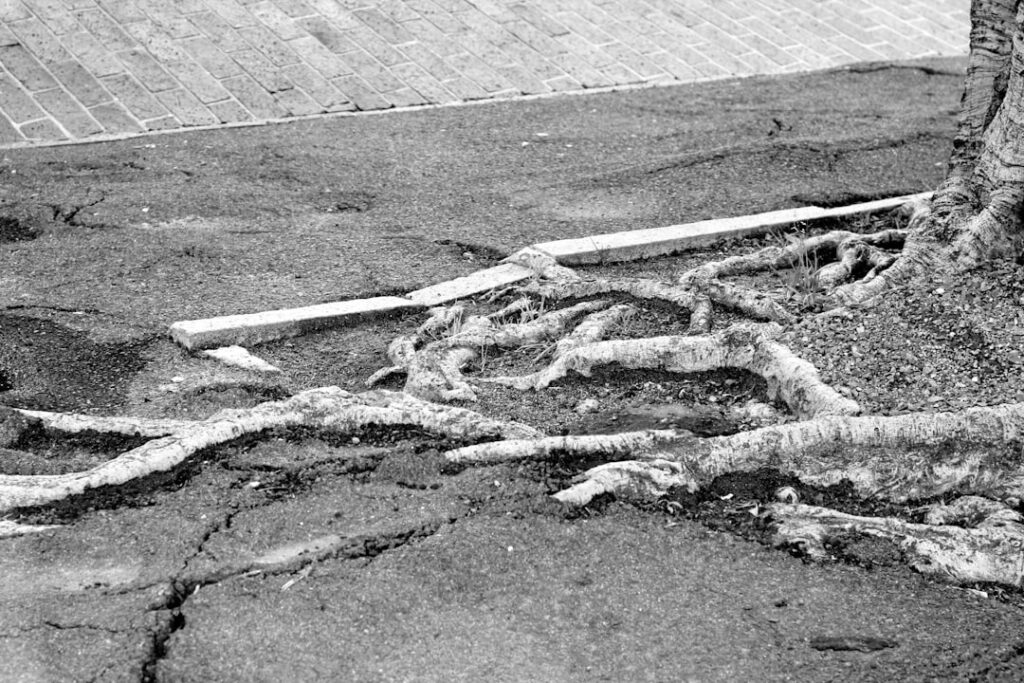
Potentially hazardous tree roots often show visible and subtle clues long before they cause damage. Homeowners may spot raised or cracked sidewalks, buckling driveways, or noticeable soil mounding near tree trunks. Indoors, signs like doors sticking, new cracks in walls or foundations, or unexplained plumbing issues can also be linked to roots.
Common visible indicators include:
- Large roots surfacing above soil, especially near walkways or structures
- Uneven lawn or patios where roots push the ground upward
- Seasonal pooling of water or sudden flooding in previously dry areas
Less obvious signals can include:
- Slower drainage or recurring clogs if roots invade underground pipes
- Patchy grass or dying plants close to a mature tree, as roots outcompete them for water
Most risk arises when large trees grow within 20-30 feet of buildings—a common situation in many Rochester neighborhoods where older lots have mature shade trees close to homes.
How Do Tree Roots Cause Damage to Homes and Infrastructure?
Tree roots can indirectly harm homes and utility systems when searching for moisture, oxygen, and nutrients. Roots typically grow outward two to three times the width of the tree’s canopy, seeking water sources—including leaky pipes or the humid soil near foundation walls. Over time, they can:
- Break or infiltrate old clay or concrete sewer lines, causing backups and expensive repairs
- Crack or shift sidewalks, steps, and driveways by lifting pavement with expanding roots
- Exert pressure on foundation walls, particularly with shallow-rooted species like maples or willows
In Rochester, clay-heavy soils and freeze-thaw cycles can amplify these risks because expanding roots leverage moisture fluctuations and soil movement during winter and spring.
Are Certain Tree Species More Problematic in This Area?
Some species have more aggressive or shallow root systems that can become problematic in compact clay soils commonly found in Rochester. Fast-growing, moisture-seeking trees tend to cause the most trouble near homes and paved areas.
Examples of species frequently associated with intrusive roots in the region:
- Silver maple and Norway maple: often used as street or shade trees, but they grow large, shallow roots
- Willow: roots actively seek out water and can travel surprisingly far
- Poplar and cottonwood: known for long, wandering root systems
- Mulberry: spreads aggressively both above and below ground
Local planting histories—such as streets lined with mature maples—mean even trees that seem sturdy or well-established can cause unexpected issues as they age.
How Can Homeowners Safely Inspect for Root Risks?

Residents can spot potential problems early by regularly walking their property and watching for visible disruption near tree bases, paths, and foundations. Visual inspection should focus on:
- Bulges, cracks, or sudden slope changes in paved areas
- Tree roots breaking through the lawn near the house or garage
- Water pooling or soil erosion after rainfall
Digging around roots is not advised, as damage can harm the tree or increase risk to infrastructure. For suspected root growth into underground pipes, watch for frequent slow drains, sewage smells outside, or lush plant growth in dry weather—a sign roots might be tapping a water source below.
What Should You Do if You Suspect Tree Root Damage?
If early warning signs appear, avoid drastic actions unless safety is threatened. Pruning large structural roots can destabilize the tree, making it vulnerable to storm failures—of particular concern in upstate New York’s severe wind and ice events.
Addressing surface issues—such as fixing pathways to accommodate root growth or patching cracks—may provide temporary relief but doesn’t change underground root structures. If foundation or underground utilities are involved, further investigation may be warranted. Local agencies provide guidance on trees near public rights-of-way; for private property, assess risk carefully before intervening.
What Are Common Myths About Tree Root Problems?
Several misconceptions circulate among homeowners:
- Roots “crack” foundations as a direct force: in most cases, roots exploit existing flaws caused by settling or water, then expand into gaps
- Only large, old trees post danger: even smaller or younger specimens can cause trouble if planted too close to structures or pipes
- Cutting exposed roots solves the issue: root pruning can worsen the problem and compromise tree health
Understanding true root growth patterns helps area residents choose the best actions. Trees are rarely “out to get” a house but may naturally follow moisture that brings them into conflict with built environments.
When Should You Take Further Action?
Significant hazards—such as a large root visibly lifting a foundation corner, consistently wet basements despite grading, or sewage backups—call for urgent evaluation and may require involving relevant public agencies or licensed specialists. Homeowners should prioritize safety if walkways or structural elements pose tripping or collapse risks.
For most routine concerns, observation and preventive care—like avoiding new plantings close to old pipes or foundations—are the most effective long-term steps.