
 See My Latest Article on HelloNation
Is the tree actually suitable for do-it-yourself removal?
A small tree may be a reasonable do-it-yourself project only when it is healthy enough to fall predictably, stands on level ground, and has a clear landing area. Height alone does not determine difficulty. A short, leaning, decayed, or storm-damaged tree can be more dangerous than a taller, straight tree in an open yard.
Before cutting, inspect the tree and its surroundings. Do not proceed if the tree:
- Touches or could fall toward overhead power lines
- Has a strong lean toward a house, garage, fence, road, or neighboring property
- Shows extensive decay, hollow areas, cracks, hanging branches, or loose bark
- Is split, uprooted, storm-damaged, or caught in another tree
- Stands on a steep, wet, icy, or unstable slope
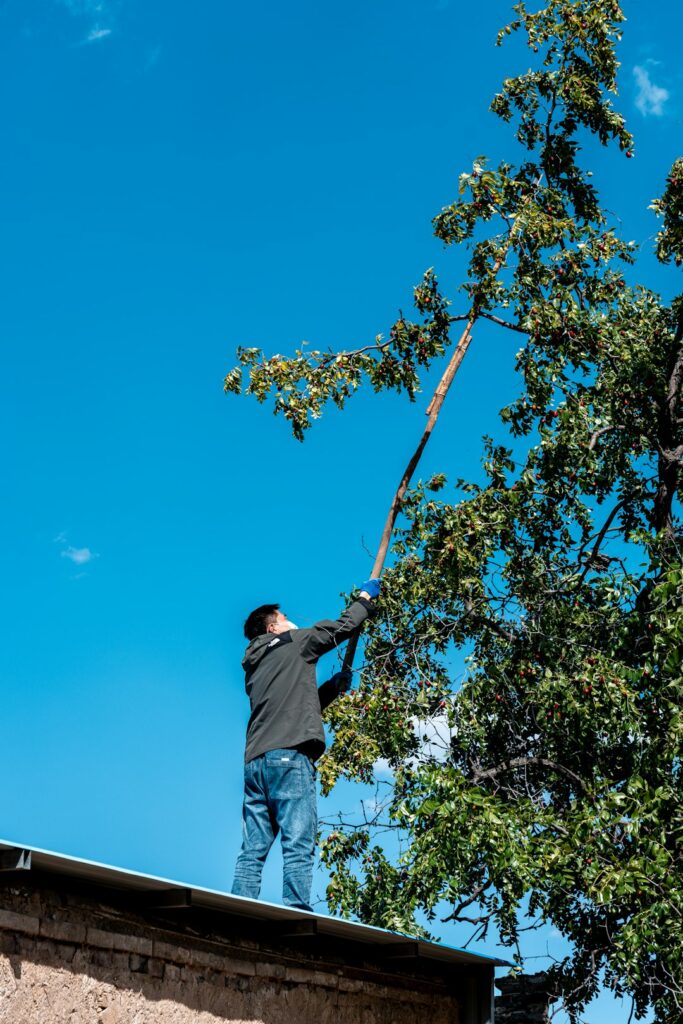
- Requires climbing, a ladder, or cutting above shoulder height
- Has branches or trunk sections under visible tension
In those situations, the safest decision is to stop. Tree movement is difficult to predict once cutting begins, especially in the freeze-and-thaw conditions common around Rochester.
What should be checked before cutting?
Walk around the entire work area and identify where the tree could fall, where branches could swing, and where a person could safely retreat. Look above, below, and behind the tree rather than focusing only on the trunk.
Remove vehicles, outdoor furniture, children’s toys, and other movable items from the work zone. Keep people and pets well away from the tree. A falling tree can bounce, roll, or send branches outward, so the danger zone extends beyond the exact landing point.
Check for:
- Overhead electrical, telephone, and cable lines
- Nearby buildings, sheds, fences, sidewalks, and parked vehicles
- Buried utility lines near the stump or planned digging area
- Dead branches that could drop during cutting
- Fences, wire, vines, or brush that could interfere with movement
- Snow, ice, mud, or wet leaves that could affect footing
If the stump will be dug out or the ground will be excavated, contact 811 before digging in New York. The required notice is generally at least two full working days, excluding the day of the request, weekends, and legal holidays. Wait until affected utilities have responded and marked their lines.
What equipment is appropriate?
For a genuinely small tree, a hand saw may be safer and more controllable than a chainsaw. A chainsaw should be used only by someone who understands its controls, kickback zone, maintenance requirements, and cutting limitations.
Basic protective equipment includes:
- Eye protection or a face shield
- Hearing protection when using powered equipment
- Work gloves with a secure grip
- Sturdy, slip-resistant boots
- Long pants and close-fitting clothing
- A properly fitted hard hat when branches could fall from above
- Chainsaw chaps when operating a chainsaw

Do not use a damaged saw, a saw with missing guards, or equipment with a malfunctioning chain brake. Start a chainsaw on the ground or another firm surface with the chain brake engaged. Keep both hands on the handles, maintain stable footing, and never cut directly overhead.
Do not work alone. Someone nearby should know the plan and be able to summon emergency help, but that person should remain outside the work zone.
How should the falling direction be planned?
The tree should fall into an open area that is free of people, structures, utility lines, and other trees. Do not assume a tree will fall opposite its lean. Weight distribution, wind, trunk defects, and branch structure all affect movement.
Identify two retreat paths before cutting. They should lead diagonally away from the expected fall direction, not directly behind the tree. Clear brush, branches, rocks, tools, and slippery debris from those paths.
Never stand directly behind the trunk while it is falling, and do not turn away from the tree. Watch for movement in the crown and be ready to move along the planned retreat route.
Wind matters. Even a modest gust can change the direction of a partially cut tree or cause dead branches to fall. Delay the work during strong wind, rain, lightning, heavy snow, or icy conditions.
What is the basic cutting process?
A simple, straight tree in an open area is generally cut using a directional notch on the side facing the intended fall, followed by a back cut from the opposite side. The notch helps establish the direction, while the uncut hinge area helps guide the trunk.
The exact cut dimensions depend on the tree’s size, lean, species, condition, and the equipment being used. Anyone unfamiliar with this technique should not improvise from a brief description or attempt to learn while holding a running chainsaw.
As the tree begins to move, stop cutting, engage the chain brake, and retreat along the planned path. Never try to push, catch, or pull a falling trunk by hand. Do not continue cutting if the tree becomes lodged in another tree. A hung-up tree can shift suddenly and create severe crushing and kickback hazards.
How should branches and the trunk be handled afterward?
Once the tree is fully on the ground and stable, remove branches from the side of the trunk opposite the direction of the cut. Watch for limbs under tension. A bent branch can spring back when released, and a trunk resting on uneven ground can roll as its weight changes.
Cut the trunk into manageable sections only if each section is stable and there is enough room to work safely. Never cut while standing downhill from a log that could roll. Keep feet clear of the bar’s path and avoid reaching across the trunk.
Do not use a chainsaw to cut wood that is buried in soil, resting on rocks, or likely to move unexpectedly. Dirt quickly dulls a chain and increases the risk of kickback.
In Rochester’s residential neighborhoods, branches and logs may need to be handled according to local collection or disposal rules. Avoid placing heavy wood in the street, blocking sidewalks, or leaving piles where snowplows, pedestrians, or drainage systems could be affected.
What should happen to the stump?
A cut stump can remain in place if it is not creating a trip hazard or interfering with construction, planting, or mowing. Grinding or digging it out is a separate task and may involve buried utilities, large roots, and unstable soil.
Do not burn the stump or use gasoline, chemicals, or improvised methods to accelerate decay. Large roots can extend well beyond the visible trunk and may affect nearby walks, foundations, drainage features, or underground lines.
If the tree showed signs of disease or an invasive pest, avoid moving untreated firewood long distances. New York restricts the movement of untreated firewood to help limit the spread of forest pests. Keep questionable wood on the property unless disposal guidance indicates otherwise.
When should the project be stopped?
Stop immediately if the tree changes direction, begins to split, becomes lodged, contacts a utility line, or moves in an unexpected way. Stay away from downed power lines and any tree touching them; assume the lines are energized.
Do not continue if weather worsens, fatigue affects concentration, or the work requires climbing or operating a saw from a ladder. Tree removal is not made safer by rushing. A small tree can still produce serious injuries, property damage, or an electrical emergency when the fall path and surrounding hazards have not been fully controlled.