
 See My Latest Article on HelloNation
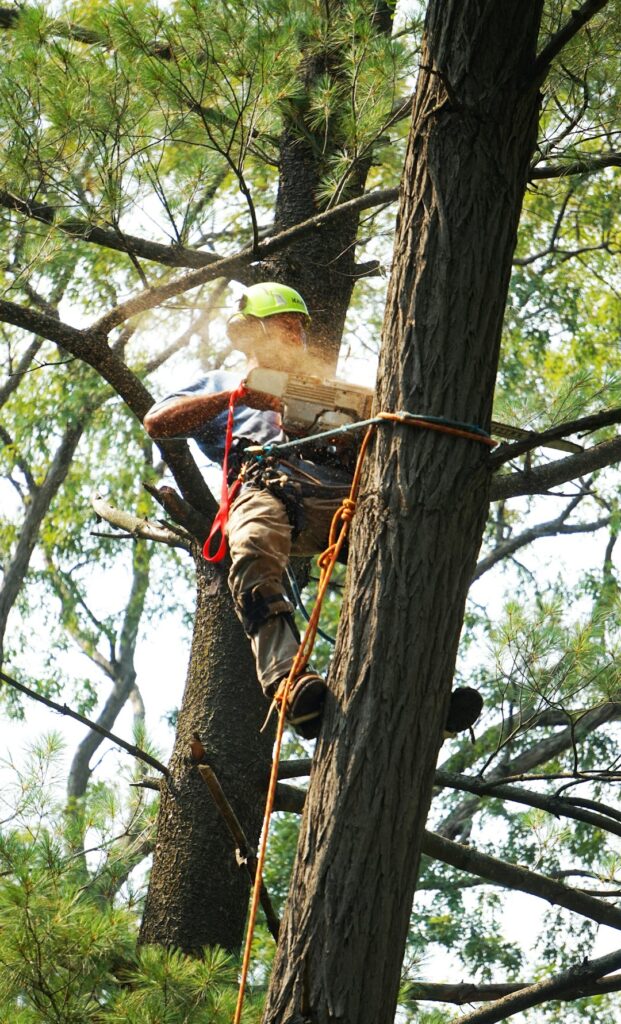
Tree trimming and tree pruning are often used as if they mean the same thing, but they describe different approaches to tree care. Trimming usually focuses on appearance, clearance, and control of overgrown branches. Pruning is more focused on tree health, structure, safety, and long-term growth.
Both may involve removing branches, yet the purpose, timing, and method can differ substantially. Understanding that distinction helps residents make better decisions about trees near homes, sidewalks, driveways, utility lines, and neighboring properties.
What is tree trimming?
Tree trimming is the selective removal of branches to manage a tree’s size, shape, or clearance. It is commonly performed when branches extend over a roof, block a window, interfere with a walkway, or grow too close to infrastructure.
Trimming may also be used to improve the appearance of ornamental trees and shrubs. For example, a tree beside a driveway might need branches lifted so vehicles can pass underneath. A tree near a sidewalk may need lower growth reduced to provide safe walking space.
Common reasons for trimming include:
- Removing branches that obstruct buildings, signs, windows, or lighting
- Keeping limbs clear of sidewalks, driveways, and roads
- Reducing contact with roofs, gutters, fences, or exterior walls
- Managing branches that have become too long or unruly
- Improving the general shape of a landscape tree
Trimming is not necessarily harmful, but excessive trimming can weaken a tree. Removing too much foliage at once can reduce the tree’s ability to produce energy, encourage rapid weak growth, and expose interior limbs to sun damage.
What is tree pruning?
Tree pruning is the intentional removal of branches to improve a tree’s health, structure, safety, or future development. Good pruning considers how a branch is attached, how the tree is growing, and how the removal will affect the rest of the canopy.
Pruning may address dead, diseased, damaged, crossing, rubbing, or poorly attached branches. It can also guide young trees so they develop strong branch spacing and a stable central structure.
Typical pruning goals include:
- Removing dead or broken limbs
- Reducing the risk of branch failure
- Correcting weak branch unions
- Improving airflow and light penetration
- Managing diseased or infested growth
- Developing a strong structure in young trees
- Preserving clearance without unnecessarily reducing the canopy
Pruning is usually more precise than general trimming. The goal is not simply to make the tree smaller. The goal is to remove specific growth for a clear biological or structural reason.
Is trimming bad for trees?
Trimming is not automatically bad for a tree, but improper trimming can cause serious problems. The greatest risks come from removing too much live growth, making indiscriminate cuts, or leaving large stubs.
A common example is topping, which cuts major limbs back to short stubs or reduces the upper canopy dramatically. Topping often triggers fast-growing shoots that are weakly attached. It can also leave large wounds that close slowly and become entry points for decay organisms.
Other harmful practices include:
- Removing more live branches than the tree can reasonably replace
- Cutting branches flush against the trunk
- Leaving long branch stubs
- Making large cuts without considering decay and wound closure
- Removing interior branches simply to create an unnaturally thin canopy
- Cutting during stressful weather or when disease transmission is more likely
A tree may look cleaner immediately after aggressive trimming, but the long-term result can include weak regrowth, decay, sunscald, reduced shade, and increased maintenance.
When should trees in Rochester be pruned?
The best pruning season depends on the tree species, the reason for pruning, and the condition of the branches. In Rochester, seasonal weather matters because trees experience cold winters, freeze-thaw cycles, spring moisture, summer storms, and occasional heavy snow or ice loads.
For many established deciduous trees, structural pruning is often easier during the dormant season, after leaves have fallen and before active spring growth begins. The branch structure is easier to see, and pruning wounds are less likely to be exposed to prolonged wet conditions.
However, dead, broken, or hazardous branches may require attention at any time of year. Waiting for a preferred season is not appropriate if a limb is hanging over a frequently used area or has been damaged by wind, ice, or snow.
Some situations call for extra caution:
- Spring-blooming trees may lose flower buds if pruned too early
- Trees with active disease may need species-specific timing
- Summer pruning can stress trees if too much foliage is removed
- Wet conditions can make access and equipment use more hazardous
- Storm-damaged limbs may be unstable even when they appear small

Season alone does not determine whether pruning is appropriate. The tree’s species, age, health, location, and condition should all be considered.
How much of a tree can be removed safely?
A conservative approach is generally safer than removing large portions of the canopy at once. The acceptable amount varies by species and circumstance, but mature trees usually tolerate less aggressive pruning than young, vigorous trees.
Removing a small number of carefully selected branches is usually less stressful than reducing the entire canopy. Large live limbs should not be removed simply because they are inconvenient unless there is a clear reason involving safety, structure, disease, or clearance.
The size of the branch also matters. Large cuts create larger wounds and may take longer to close. A sequence of smaller, well-planned pruning operations can be safer than one severe reduction.
For young trees, early structural pruning can prevent future problems by encouraging well-spaced branches. For mature trees, the emphasis is usually on preservation: remove only what is necessary and avoid changing the tree’s natural form more than required.
What is the difference between crown raising, thinning, and reduction?
These terms describe specific pruning objectives:
Crown raising removes lower branches to create clearance above sidewalks, driveways, roads, buildings, or outdoor activity areas.
Crown thinning selectively removes some branches throughout the canopy to improve spacing, light, and airflow. It should not leave the tree sparse or heavily weighted toward the ends of branches.
Crown reduction decreases the height or spread of a tree by shortening selected branches back to suitable lateral branches. It is different from topping because proper reduction preserves branch structure rather than cutting limbs to arbitrary stubs.
These techniques are not interchangeable. Raising may solve a clearance problem, while thinning may address crowded growth. Reduction may be considered when a tree has outgrown its location, but it requires careful cuts and may not be suitable for every species.
Can homeowners prune small trees themselves?
Light pruning of young, accessible trees can often be managed by a careful homeowner using clean, sharp tools and a basic understanding of branch structure. Small dead twigs, water sprouts, and clearly damaged branches may be reasonable targets.
Work becomes substantially more hazardous when branches are near electrical conductors, roofs, roads, or occupied areas. Climbing a tree or using a ladder near unstable branches creates additional risks. A branch can shift, split, or fall in an unexpected direction.
Extra caution is warranted when:
- A limb is large, cracked, hanging, or partially detached
- The tree has been damaged by a storm
- Branches are near utility lines
- Cutting requires climbing
- The tree leans toward a structure or public area
- There are signs of decay, cavities, or major trunk damage
In these cases, safety and legal considerations may require qualified assistance. Local rules may also apply when work affects public spaces, shared property boundaries, or protected trees.
How can residents tell whether a tree needs pruning?
A tree may need pruning when branches are dead, broken, rubbing together, poorly attached, diseased, or interfering with a structure. Warning signs include hanging limbs, fresh cracks, large dead branches, repeated branch failure, and branches making contact with roofs or utility lines.
Not every unusual-looking branch needs removal. A natural, slightly uneven canopy is not necessarily a problem, and removing healthy growth for cosmetic reasons can create more harm than benefit.
The most useful question is not “How can the tree be made smaller?” but rather, “Which specific branches create a health, safety, clearance, or structural concern?” That question leads to more conservative decisions and better long-term tree care.