

 See My Latest Article on HelloNation
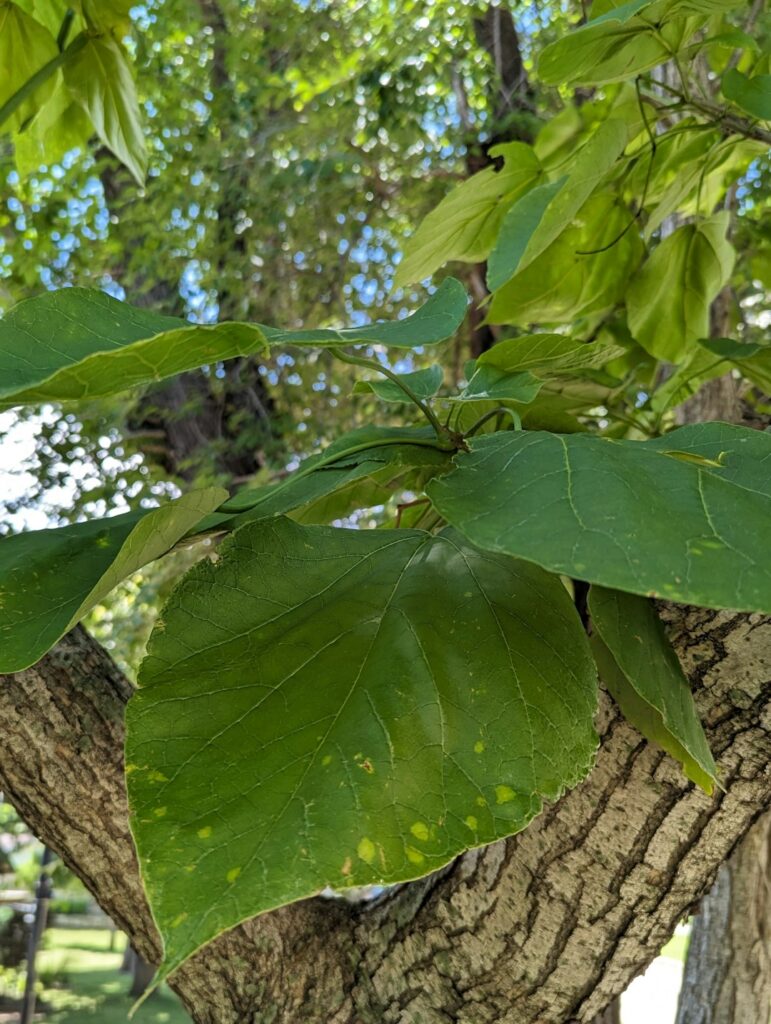
Why are my tree’s leaves curling?
Curling leaves usually mean the tree is responding to stress. The most common causes are water imbalance, sap-feeding insects, chemical exposure, weather injury, or disease. The pattern of the curling—along with where it appears and what the leaves look like—often provides the best clue.
A few curled leaves do not always signal a serious problem. Trees may temporarily curl foliage during hot, dry, windy weather to reduce water loss. Widespread curling, repeated yearly symptoms, distorted new growth, or sudden damage across several plants deserves closer inspection.
Could dry soil or too much water be responsible?
Yes. Both drought and excess moisture can cause curled or wilted leaves because tree roots cannot maintain a steady water supply to the canopy.
During dry periods, leaves may curl inward, droop, develop brown edges, or fall early. In Rochester, NY, spring moisture can give way to sunny, dry stretches during summer. Newly planted trees, trees growing near pavement, and trees surrounded by compacted soil can become stressed especially quickly.
Overwatering creates a different root problem. Saturated soil contains less oxygen, which can damage fine roots and make the tree appear drought-stressed even when the ground is wet. Poor drainage, heavy clay soil, downspout discharge, or frequent shallow watering can contribute.
Check the soil several inches below the surface rather than judging by appearance alone. If it is dry, water slowly and deeply over the root zone. If it remains soggy for days, adding more water will not help.
Mulch can reduce moisture swings, but it should be spread in a broad, shallow layer and kept away from the trunk. A mound of mulch against the bark can retain excess moisture and encourage decay.
What insects make leaves curl?
Aphids are a frequent cause of curled leaves, especially on soft new growth. These tiny insects feed on plant sap and may cause leaves to pucker, twist, or curl around the insects.
Look closely at:
- The undersides of young leaves
- Tender shoot tips
- Sticky residue on leaves or objects below the tree
- Dark, sooty growth on that sticky residue
- Ant activity on the trunk or branches
Other sap-feeding insects, including some scales and leafhoppers, can also contribute to distorted foliage. A curled leaf may hide the insects, so gently unfold one or inspect nearby leaves that have not yet curled.
Light aphid activity is often tolerated by established trees, particularly when natural predators are present. A strong stream of water can dislodge many aphids from reachable foliage. Avoid applying insecticides based only on the presence of a few insects, since unnecessary treatments can harm beneficial organisms and may not reach pests protected inside curled leaves.
Can herbicide or lawn treatments cause curling?
Chemical injury is a major possibility when leaves become cupped, twisted, narrow, or distorted—especially on new growth. Herbicide drift can affect trees even when the product was applied some distance away. Root uptake is also possible if a weed-control product reaches soil within the tree’s root zone.
Chemical injury becomes more likely when:
- Several nearby plants show similar distortion
- Symptoms appear soon after lawn or weed treatment
- New leaves are affected more than older leaves
- Leaves curl without obvious insect activity
- The tree has twisted shoots or unusually short growth

Fertilizer salts, deicing materials, and other chemicals can also injure roots or leaf margins. Roadside and sidewalk trees may be exposed to salt carried by winter runoff or snow storage.
Do not immediately prune every curled branch. If the damage is chemical-related, the tree may produce healthier growth later in the season. Watering during dry conditions and avoiding additional stress are generally more useful than adding fertilizer.
Could cold, wind, or heat be the cause?
Weather can curl leaves without any pest or disease being present. Sudden temperature changes, strong wind, late frost, and intense heat can all interfere with water movement through a tree.
Cold injury often affects newly opened leaves, which may become curled, limp, blackened, or translucent. Wind can dry foliage faster than roots can replace lost moisture. Heat may cause temporary curling even when the soil still contains some moisture, particularly on exposed outer branches.
In the local climate, trees can experience rapid changes from cool, wet spring conditions to hot, dry weather. Symptoms caused by weather often appear on the side of the tree facing prevailing wind, strong afternoon sun, or an exposed street edge.
If the affected leaves are limited to one flush of growth and the buds or branches remain healthy, the tree may recover as new foliage develops.
Which diseases cause curled leaves?
Some diseases cause curling along with discoloration, spots, blisters, puckering, or premature leaf drop. The likely disease depends heavily on the tree species.
For example, curled leaves on fruit trees may be associated with fungal diseases, while certain ornamental and shade trees may show curling from other pathogens. Disease is more likely when symptoms repeat in the same season, spread gradually, or include visible spots and abnormal growth.
Avoid diagnosing a disease from leaf curling alone. Note the tree species, whether symptoms affect old or new leaves, and whether the undersides contain insects or fungal growth. Removing fallen leaves can reduce some disease pressure, but it will not correct problems caused by drought, poor drainage, or chemical exposure.
What should I check first?
A simple inspection can narrow the possibilities:
1. Look at the newest leaves and the oldest leaves separately.
2. Check both sides of several curled leaves.
3. Examine the soil for dryness, standing water, or a hard, compacted surface.
4. Look for brown edges, spots, holes, sticky residue, or fine webbing.
5. Check whether nearby plants have similar symptoms.
6. Think back to recent frost, heat, construction, pruning, lawn treatment, or deicing exposure.
7. Compare the affected side of the tree with the healthier side.
Take clear photographs as symptoms develop. A photo of the whole tree, a close view of the leaves, and the trunk or surrounding soil can be more useful than a single close-up.
When is curled foliage a serious concern?
Prompt attention is warranted when leaves curl throughout the canopy, branches begin dying back, the trunk has cracks or oozing areas, or the tree is losing leaves rapidly during the growing season. Extra caution is also appropriate if the tree is near a house, roadway, utility line, or area used by children and pets and has dead or broken limbs.
A tree that is leaning, has a split trunk, or drops large branches should be treated as a safety issue rather than only a plant-health problem. Diagnosis may also be difficult when several stresses occur together, such as compacted soil combined with drought and insect feeding.
Curling leaves are a symptom, not a diagnosis. Looking at moisture, insects, weather, chemicals, and disease together usually provides a more reliable answer than focusing on the leaf shape alone.